
Story by Willem Oosthoek
Chassis 2452 took the start in an astonishing 50-plus races (including preliminaries) from December 1959 into early 1963, winning overall victories in a good number of them. This happened during a time when last year’s sports racer was often an also ran, so this Birdcage must have been something special. Only two Italian-owned 2-liter Tipo 60s (chassis 2460 and 2465) had a longer competition history, no doubt helped by the proximity of the Maserati factory when it became time for repairs and parts. Things were not that easy for a Birdcage located on the West Coast, a model that developed a reputation for breaking its stressed chassis tubes and for cracking its exhaust system due to a heavily vibrating 4-cylinder, 2.9-liter engine. So, let’s have a look at the people responsible for the success story of chassis 2452.
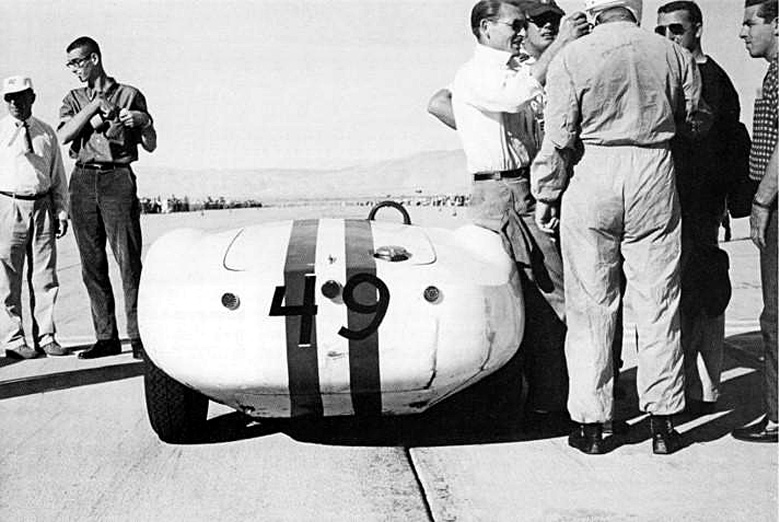
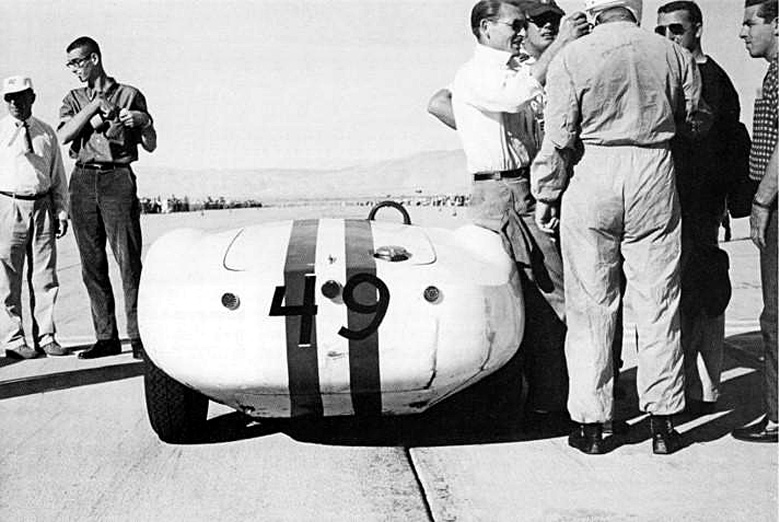
After Bob Drake’s victory at Phoenix in early May 1960, Joe Lubin sold the Birdcage to his good friend Stanley R. Sugarman. Sugarman originated from Los Angeles, where he received a degree in aeronautical engineering. Now a Phoenix-based industrialist, he previously raced a Porsche 550RS himself and had also fielded a Ferrari 750 Monza for his one-time Phoenix mechanic, Jim Connor. Drake raced the car in two more events under Lubin’s livery of white-and-blue-stripes, likely a condition in the sales agreement. At Santa Barbara at the end of May, after placing fourth in the prelim, Drake claimed victory in the Cal Club feature over Bill Krause, who raced his own D-type Jaguar with Chevy power. During the SCCA’s early June event at Laguna Seca, Drake won the prelim and was well on his way to victory in the feature when, five laps from the finish, the Maserati’s transmission seal failed. It left Drake with only one operational gear and Ken Miles’ Porsche RSK managed to pass the stricken car just before the checkered flag. In nine race weekends, Drake’s tally was five feature victories, two second places and two DNFs.
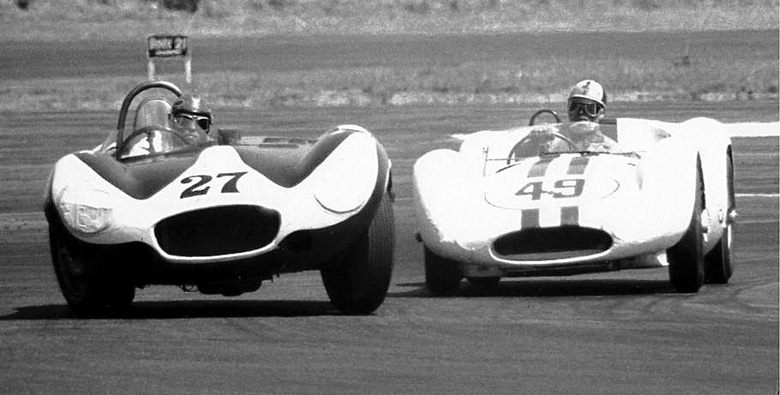
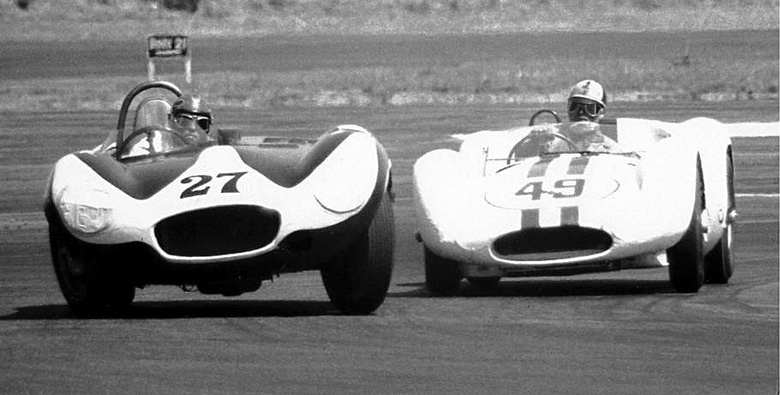
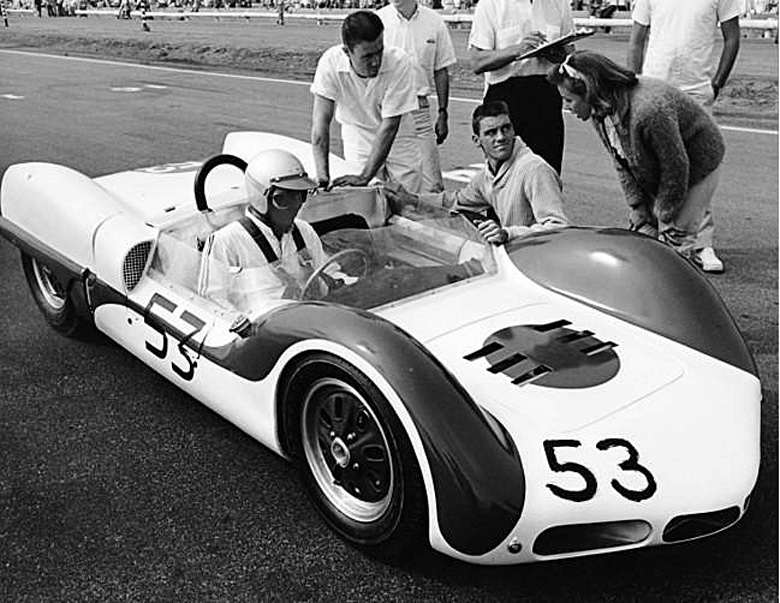
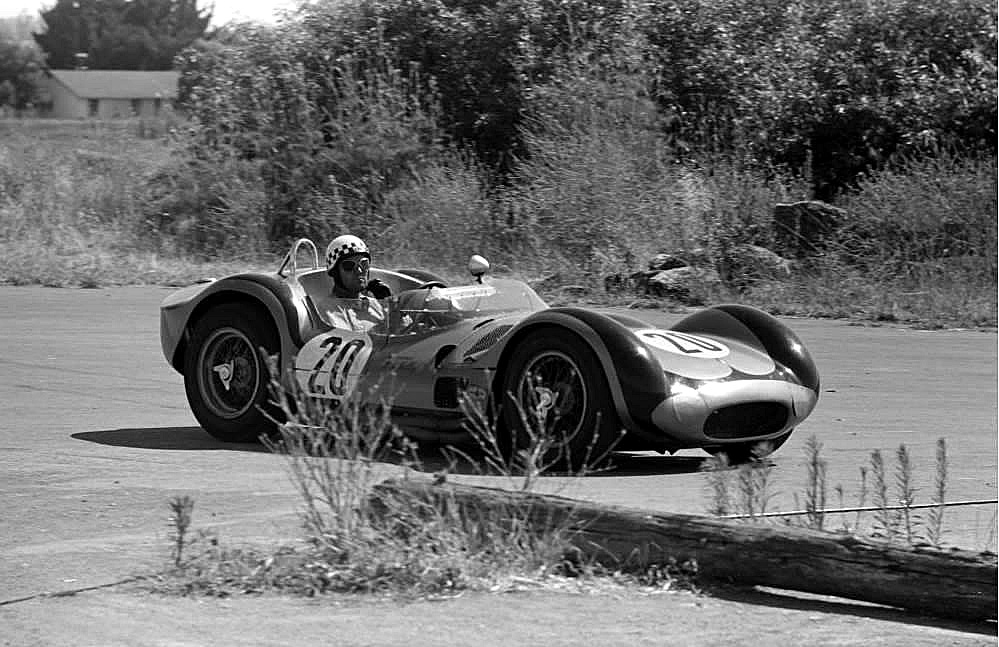
New owner Sugarman kept the services of Bill Rudd to maintain the Birdcage and would repaint the car in an orange red with white stripes. The small roll bar was also replaced by a sturdier version. In its next appearance at Pomona in late June, it was Jim Connor at the wheel, who had to get used to the car. He finished the weekend in second place in the prelim and the feature, in both cases behind Old Yaller 2 driven by Max Balchowsky. While Drake used race number 49, Connor selected number 48 as his favorite.
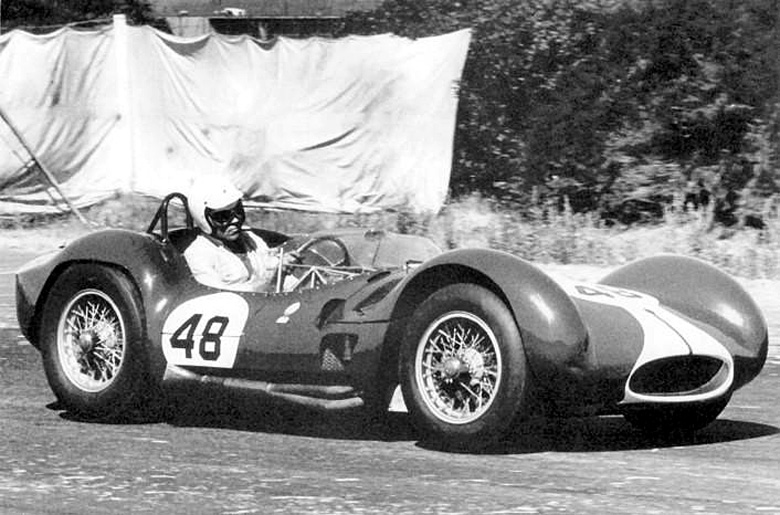
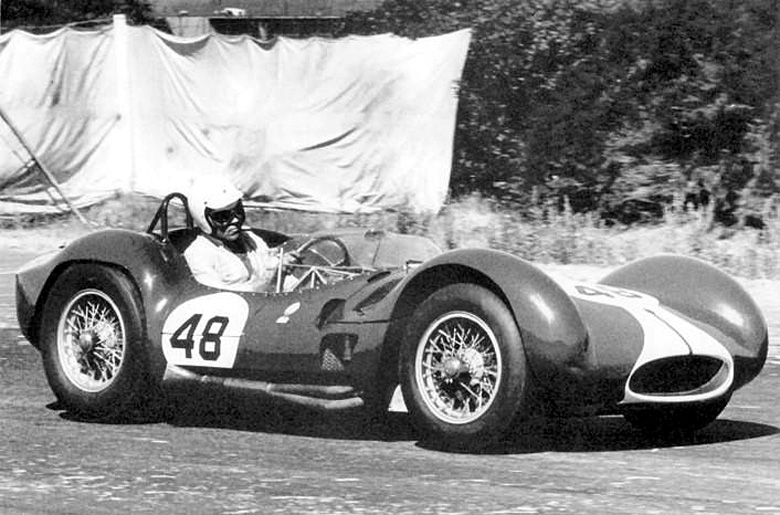
The next three outings turned up a perfect score, with overall wins in both the prelims and features at Vaca Valley (SCCA, early July), Santa Barbara (Cal Club, early September) and Cotati (SCCA, mid-September). Racing fans called the Birdcage “the hottest car on the West Coast.” Both the Santa Barbara and Cotati victories were unexpected. At Santa Barbara Connor had lost his clutch in practice. Bill Rudd disassembled the unit twice, to no avail since the release levers had worn out. Connor needed a push start once the rest of the grid had taken off, having to shift without the benefit of a clutch. However, Dick Morgensen’s and Jack Graham’s Testa Rossas had no answer to the flying Birdcage. At Cotati a similar situation arose, this time because of an unwilling starter motor after the solenoid had worked itself loose. Despite a push start from the tail end of the grid, and a subsequent pit stop to check on an increasingly noisy gearbox, Connor managed to beat Emil Pardee’s Porsche RSK and Dave Ridenour’s Costin Lister/Jag to the finish.
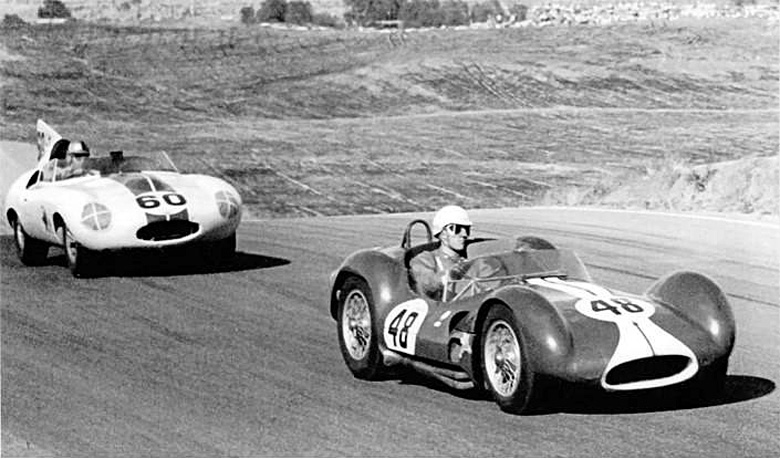

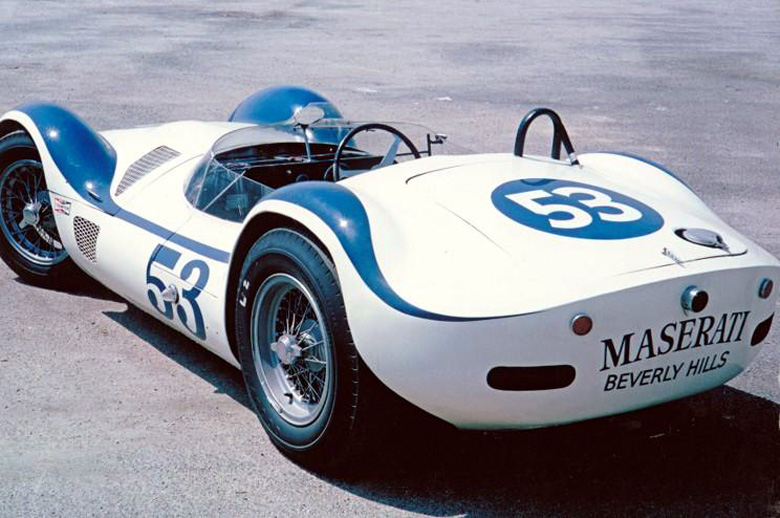
Much fiercer competition lay ahead at Riverside, for the October Times Grand Prix, a professional race sanctioned by USAC. Among the competitors were newer and improved Birdcages, as well as the first Lotus 19s in the U.S. Connor qualified 12th fastest at 2’07”76, while the pole-setting Lotus 19s did laps of 2’00”93 (Dan Gurney) and 2’03”62 (Stirling Moss). Bill Krause, in the latest version of the Birdcage Maserati, recorded 2’03”90 for the third spot on the front row. By mid-race Connor ran eighth overall when the transaxle of his Birdcage broke, joining both Lotus 19s into retirement. Krause’s new Birdcage, owned by Maserati Representatives of Beverly Hills Inc., claimed a popular victory.
Things did not look well for chassis 2452. The two-heat Pacific Grand Prix at Laguna Seca was scheduled one week after Riverside, but no transaxle parts were available for the car. At Riverside Jim Hall had to rely on his older Maserati 570S, after his own Birdcage blew its engine in practice. And the twisty Laguna Seca course was not exactly suitable for Hall’s 570S, nicknamed “the white whale.”
Quick wits, Sugarman and Hall partnered up. Hall offered the healthy transaxle of his disabled Birdcage for the stricken chassis 2452, provided he could race the car himself instead of Connor. Sugarman agreed and Bill Rudd, who did the installation, must have selected the perfect gear ratios for the track: the oldest Tipo 61 in existence outqualified all the newer Birdcages. Hall claimed the second grid position in 1’17”8, with only Moss’s Lotus 19 faster thanks to a lap of 1’17”3. Krause’s Birdcage equaled Hall’s time, but did so later in the day and had to start from the second row.

In the first heat Hall led the field for 15 laps until Moss passed him and that is how they finished. Heat two started just like the first one, with Hall in first place until Moss took over again after eight laps. Augie Pabst’s Scarab also managed to pass the Sugarman car, while Hall and Krause began a battle for third place in Birdcages that were evenly matched. Two laps before the finish Krause outflanked Hall in turn 9, forcing Hall to take evasive action while hitting some haybales. Krause slowed down and gestured Hall to go ahead, but the encounter had knocked out the fuel pump of chassis 2452. The Sugarman Birdcage was parked at the start-finish line to wait out the rest of the heat, finishing in seventh spot. The combined heat results gave Hall third overall in the borrowed car. Moss was the overall winner.

After Hall took his transaxle back to Texas, the Sugarman Birdcage was forced into a rest of almost a year. It is likely that the owner had no interest in financing a new transaxle until closer to the 1961 round of lucrative professional races on the West Coast, where sizeable purses were to be gained. However, on October 12, 1961, the car changed ownership unexpectedly. It went to Harry Finer, who made his fortune in the New York garment industry. In May 1961 Finer had taken over George Humiston’s bankrupt Maserati Reps of Beverly Hills dealership. Although Krause had won the 1960 Times Grand Prix for Humiston, the driver had noticed that the GT Maseratis ordered for the dealership’s retail operations were piling up in warehouses. They were selling much slower than anticipated. Krause’s winning Tipo 61 (chassis 2469) fell victim to the dealership’s financial woes as well and it was sold to Chuck Sargent in January 1961.
The circumstances of chassis 2452’s ownership transfer to Finer were interesting, since Sugarman had no intention to sell. His long-time mechanic Bill Rudd was no longer available, having moved to Reno to work for Bill Harrah. Maserati Reps of Beverly Hills became the only local operation that could repair chassis 2452. Finer promised a free repair in exchange for having first choice of driver. He wanted Bill Krause, hoping that his wins would lead to improved Maserati GT sales. Although Sugarman did not come back with a firm answer, a new transaxle was installed, and the car was finished just before the October 1961 Times Grand Prix at Riverside. Finer entered the car for Krause, the 1960 winner, but Sugarman, denying any formal agreement, entered it instead for his regular driver, Jim Connor.
Connor practiced chassis 2452 early Thursday before the race, but in addition to Finer, the sponsoring Los Angeles Times wanted Krause, who had major crowd appeal, in the car as well. In the meantime, the sponsor would not allow the Birdcage on the track for practice or qualifying. The dispute was resolved at the last moment – three days before race day – when Finer offered to buy the Maserati from Sugarman, who had little choice. By now the car had been repainted white with red scallops.
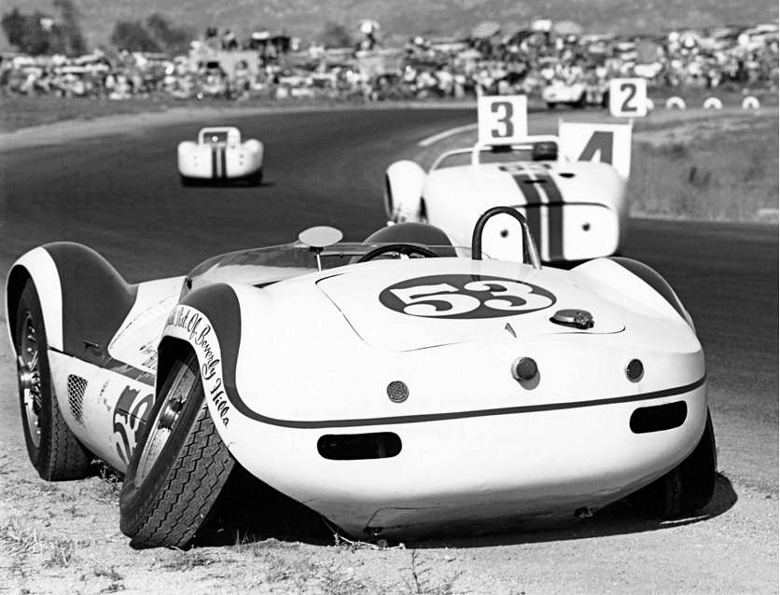
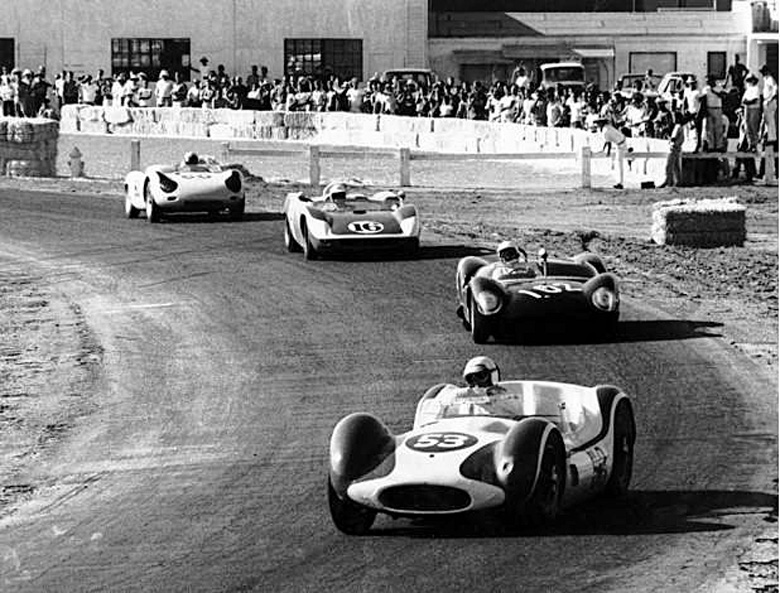
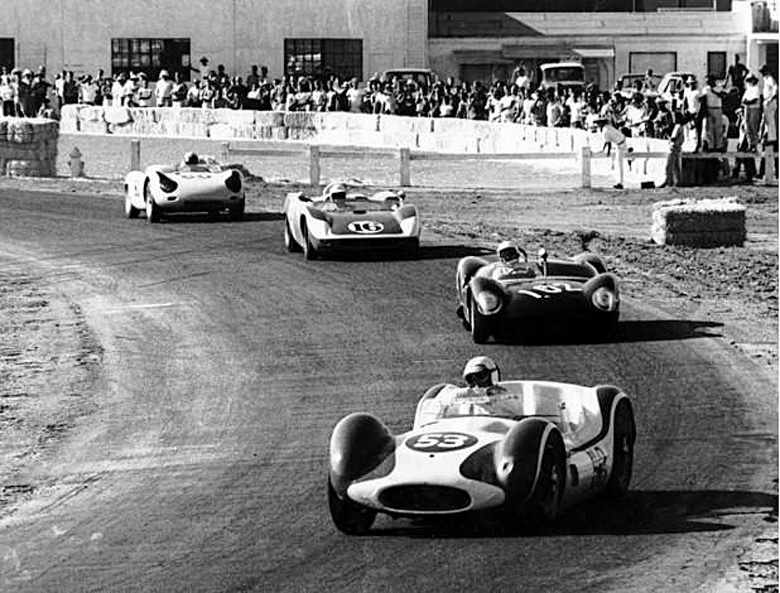
During chassis 2452’s year of inactivity, tremendous changes had taken place in sportscar racing. The rear-engined revolution was in full swing and even Maserati had come out with a rear-engined model, the Tipo 63. The front-engined Tipo 61 Birdcage had been out of production for a year, so how would Krause perform in this three-year old car. Well, not bad at all! At Riverside’s 1961 Times Grand Prix he qualified the Tipo 61 on the fourth row with a time of 2’06”6, despite dropping a valve during his run. He did feel bad about Connor losing his ride and offered him his own D-type/Chevy. It did not work out, since the tall Arizona driver would not fit the Jaguar cockpit.
The race itself belonged to the rear-engined brigade though, with Jack Brabham and Bruce McLaren finishing 1-2 in 2.7-liter Climax-engined Cooper Monacos. Krause’s Birdcage suffered a broken de Dion axle early in the race and lost a wheel. He blamed metal fatigue suffered by the old car.
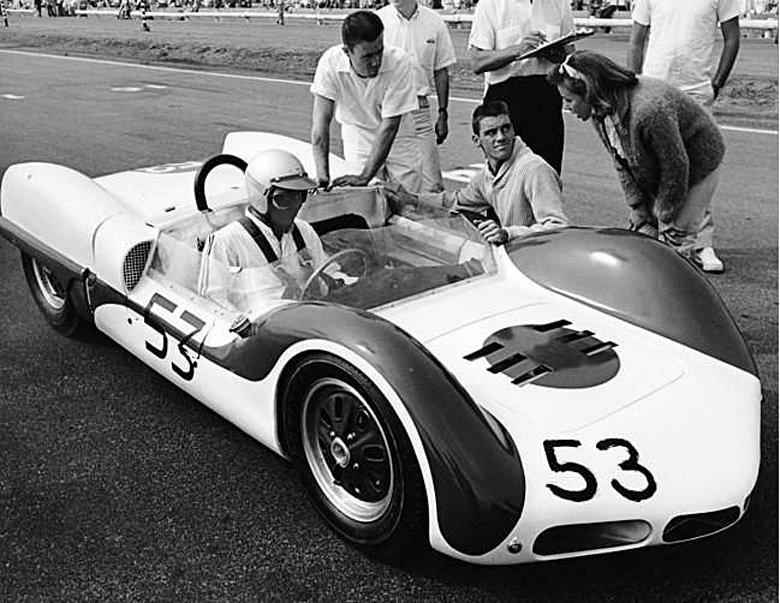
The damage caused another long delay. Period reports in early 1962 mention how the ex-Drake, ex-Connor Birdcage sat in the Maserati Reps shop for months in a million pieces, waiting for rear-end parts. Mechanic Max Kelly, with the help from the 17-year old Gordon Chance, began putting it all together and by the spring of 1962, with the arrival of vital parts from Modena, chassis 2452 was ready to run once more, still in white with red scallops.
The first four events were disappointing as Krause dropped out of every single one for various reasons. In May 1962 at Santa Barbara’s Cal Club event the Maserati led for 25 of 27 laps, only to rupture a fuel line, dousing the driver with gasoline. It gave victory to Ken Miles in a 3-liter, V12-engined Ferrari TRC. The month of June was not any better. At Laguna Seca’s SCCA event, after winning the prelim, the car had to give up its lead by mid-race to Pete Lovely’s Lotus 19 due to a distributor malfunction. In a USAC sanctioned event at Portland, Oregon, a week later, throttle linkage problems led to a retirement after an early lead, with Jerry Grant’s Testa Rossa inheriting first place as a result. And after leading the Cal Club’s Riverside 6 Hours with co-driver Chuck Parsons, the car’s transaxle packed up, giving victory to a Ferrari 250GT driven by Ken Miles and Bob Drake.
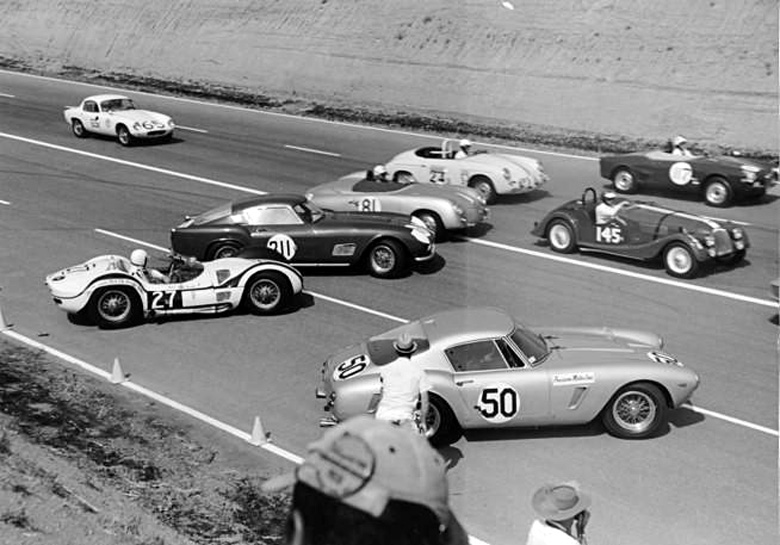
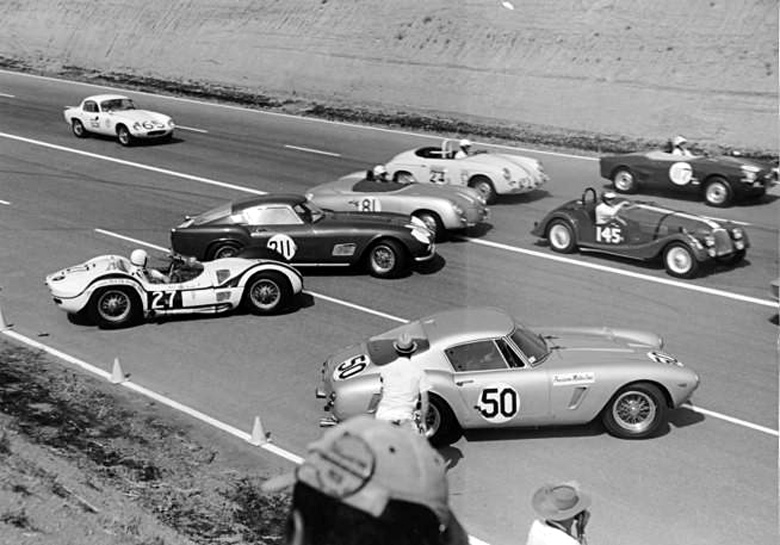
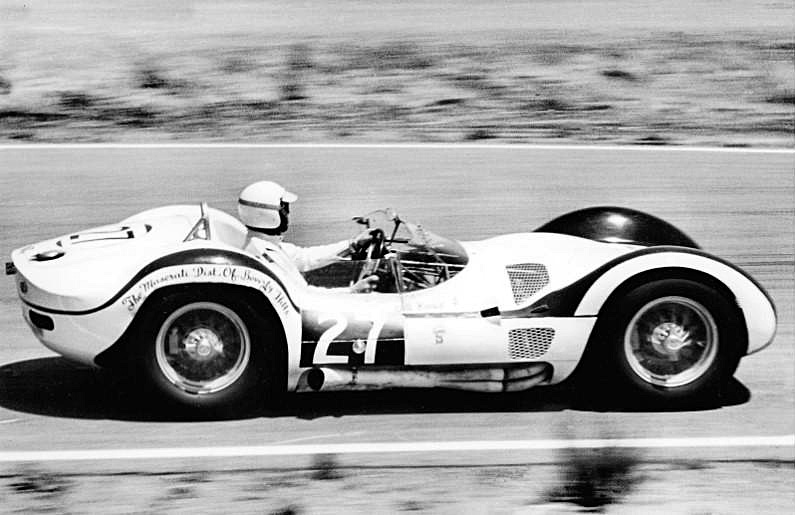
During an interview in 1998 Krause recalled his trip to the Northwest: “We went up to the Rose Festival race at Portland, Oregon. Jerry Grant was from up North and he raced a Testa Rossa there, while I had never even run at Portland. We broke the track record, qualifying fastest. It made Jerry Grant mad as hell! On race day I was leading when I got into some gravel in the first turn. Something hit the fuel line underneath the car, pushing it back a little bit and pinched the line. It killed the engine. I came in and we found it right away. But we lost a lap and a half, and I was mad at myself. I think I broke the lap record six times in the next ten laps, only to have the throttle linkage come off completely.”
Everything that could possibly go wrong had done so, but the next five events resulted in as many overall victories. In an SCCA race at the new Oakland Airport, Krause and the aging Birdcage beat Bill Sturgis in a new Cooper Monaco. Later that month, and again in August, Krause won USAC sanctioned events at Pomona, at the expense of the Porsches, first of Jay Hills and then Ken Miles. The August Pomona race was especially rewarding for Krause. Starting at the back of the grid because he did not run the prelim, he was forced to steer with one hand, holding the gearshift lever in place with the other.
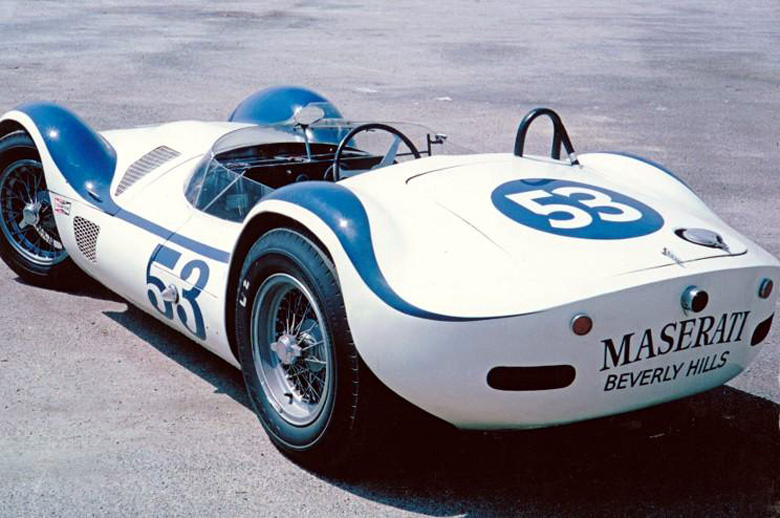
In September, at Santa Barbara (Cal Club) and Reno (SCCA) two more overall victories followed, this time with Lance Reventlow’s new Scarab/Olds and Don Wester’s RSK at the receiving end. During Reno’s prelim the Tipo 61 developed transaxle problems and Krause had to start the feature again at the back of the field. It proved no problem for the combination.
As Krause remembered: “Bill Harrah had decided to put on a road race (in Reno). I towed the car myself, with my wife and a friend. During practice the Maser had only first, second and third gear. Now at Maserati Reps they had put in a new transmission before the trip. I tried to go to fourth, but it would not do it. It turned out that the new transmission’s rod that comes back to the shifter was out of phase, in a different position. I just sawed it in half, went down to a welding shop, put a bolt in it, twisted it, welded it up and won the Reno race.” Krause was a driver-mechanic of the old school!
In August chassis 2452 had also received its fourth owner, after Harry Finer sold it to Steve Diulo, a young enthusiast, who had the red scallops repainted in blue. So, some of Krause’s victories happened on Diulo’s watch, although the Birdcage was still serviced and sponsored by Maserati Reps of Beverly Hills.
In 1962 three USAC sanctioned events still lay ahead, with good money to be earned. However, for the first time Krause realized that, despite his racing skills, he would be an also-ran amid the fiercely competitive fields. Late September in the Northwest Grand Prix, a two-heat event at Kent near Seattle, he barely made the race after burning a piston in practice. In the first heat he battled Joakim Bonnier’s new 8-cylinder Porsche and various Lotus 23s, settling for seventh spot. At the end of heat 2 the Birdcage came home in sixth, adding up to a combined fifth overall position. Dan Gurney and Masten Gregory scored a 1-2 in their Lotus 19s.
Krause: “Before moving on to Kent after the Reno race, I decided to stop at Bill Rudd’s, who was working for Bill Harrah now. I thought I was being a really smart guy and told him that I knew the Maser had been faster when he used to prepare it than it was now. So, Rudd started working on the engine, put on different velocity stacks, changed the jets and so on. We continued to Kent, went out to qualify and burned a piston! We managed to locate a new piston in Beverly Hills and Max Kelly, our mechanic there, flew it in on Saturday night. We had taken the engine apart already. Kelly put in the new piston and the next day I started on the last row. While working my way to the front, I clipped a tire marker on the inside of one of the Esses. It bent the fender in against my tire and it slowed the Birdcage down by 500 rpm along the straightaway. The car started leaking oil, the sun was going down, the wind shield was covered with oil and so were my goggles. I could hardly see but we finished fifth overall. As soon as I stopped the oil on the exhaust caught on fire. It was a mess. It was a pretty old car by then. But those Birdcages were tough. The only problem was that they would vibrate things apart, like the little welds in the corners, which would break.”
For the October Times Grand Prix at Riverside Krause decided to forego the Diulo Birdcage for a new Maserati-engined Elva Mk 6, entered by Maserati Reps of Beverly Hills. It was not fully developed, and Krause did not make the race. Ken Miles had been asked to substitute for Krause in the Birdcage, which he did with a decent qualifying time of 1’40”6 on the shortened track. Seemingly belching fire from its exhaust pipes in every photo taken of chassis 2452 during that race, Miles did well by finishing sixth overall. Victory went to Roger Penske’s controversial Zerex-Duralite Special.
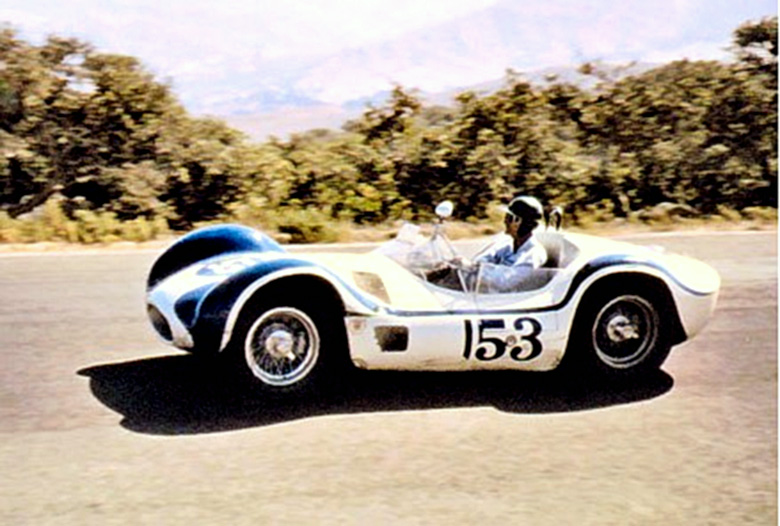
At Laguna Seca the following week Miles barely managed to qualify chassis 2452. He started on the last row of the grid, next to Augie Pabst in what was supposed to be the most competitive Birdcage Maserati, Briggs Cunningham’s rear-engined 3-liter V12 Tipo 64. It was a strong indication of Maserati’s declining racing fortunes by the end of 1962. Both cars dropped out within a couple of laps, the Diulo Tipo 61 due to a holed piston. Overall Penske’s Zerex-Duralite Special won again, thanks to second-place heat results behind the Lotus 19s of Dan Gurney and Lloyd Ruby.
This was the end of the competitive life for chassis 2452’s engine. For 1963 a replacement 4-cylnder unit was found and installed. It came from Loyal Katskee’s chassis 2454, bought from Don Skogmo. Although enlarged from 2,890 cc to 2,970 cc, it did not offer much in terms of stronger performance. For the new season Diulo had the car repainted in gold and black.
Two 1963 races are on record for the old warrior. In a Cal Club event at Riverside in February Hollywood stuntman Bob Harris drove it, although his results were not disclosed in any of the period reports. In March Harris was scheduled to race it again in a Cal Club event staged at Dodger Stadium’s parking area. When Krause became available, he replaced Harris at the wheel. With all entries forced to install mufflers because of the proximity to a housing development, the Maserati was down on power by some 500 rpm. On a Mickey Mouse track that benefited Porsches, Krause could do no more than a third-place finish, behind the RS-60s driven by Ken Miles and Jay Hills. After that, Diulo decided to retire the well-used car. Based on photos, chassis 2452 made one final appearance at Cotati in May 1964, with Ron Dykes at the wheel. Dykes had formerly raced a 2-liter Tipo 60. At Cotati the Tipo 61 was still painted in Diulo’s 1963 colors of gold-and-black, although the car may have been sold to Dykes by then. No Cotati results have surfaced for the Birdcage.
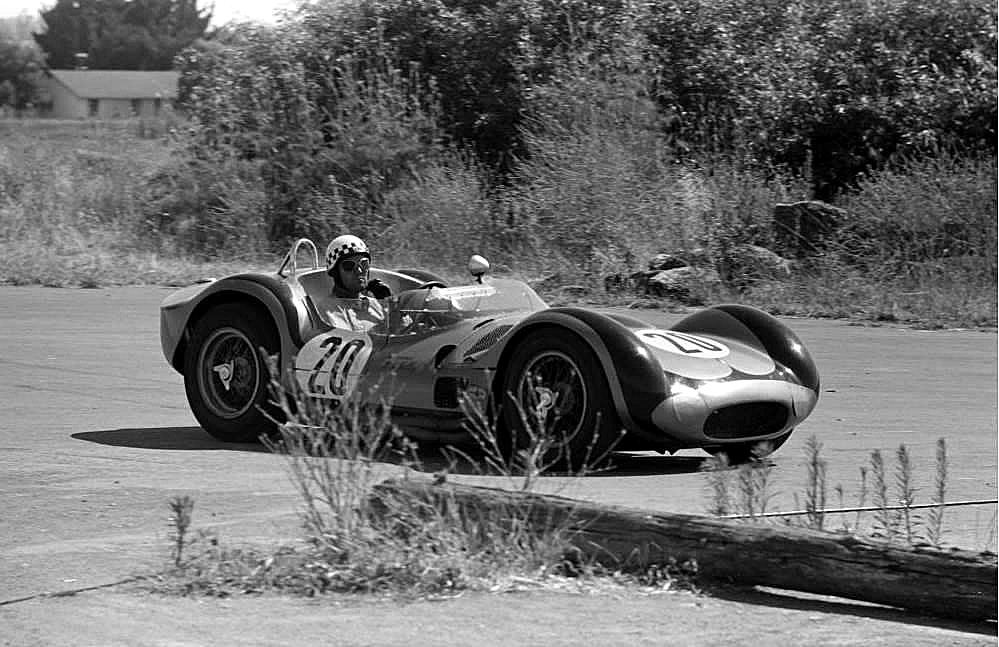
By the late 1960s the historic racing circuit beckoned, in which chassis 2452 is still involved today. It is one of the few Birdcages in the U.S. that maintains its original chassis, mostly original bodywork and a period correct engine. First owner Joe Lubin would have been pleased to see how his Birdcage purchase of 1959 has survived the ravages of time, and racing.
Willem Oosthoek, October 9, 2019.